

OT SOC: Future-Proof Protection for Critical Infrastructures
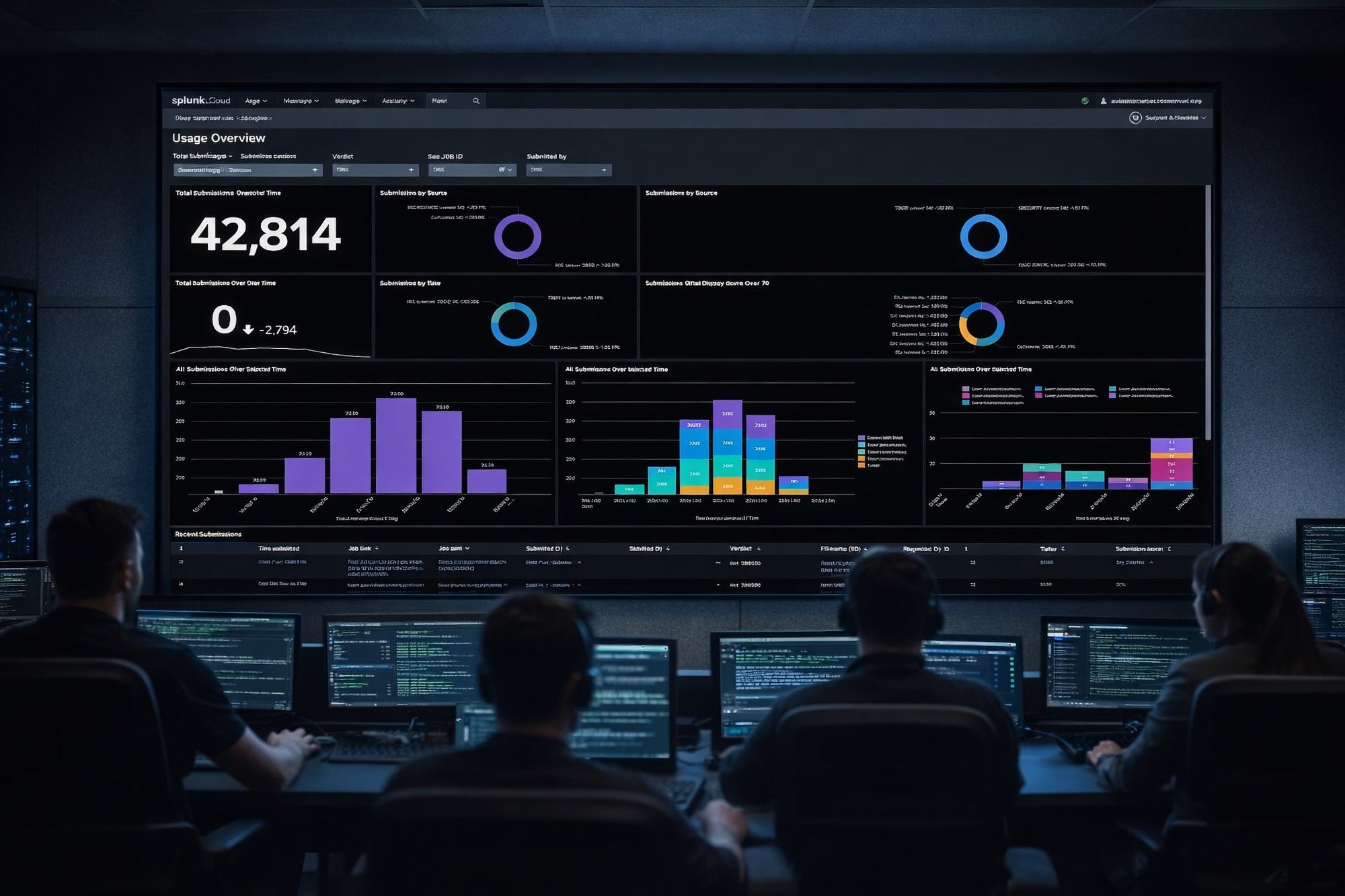
The digitalization of industrial systems has reached a point where traditional IT security models can no longer manage risks in isolation. Production lines, energy grids, water utilities, transportation systems, and other critical infrastructures have evolved into interconnected, automated ecosystems filled with sensors, supervisory platforms, and network devices. However, industrial digitalization has brought more than just efficiency: it has introduced an entirely new attack surface. While "air-gapping" was once the mantra, the boundary between OT systems and the IT world has now blurred.
An increasing number of cyberattacks specifically targeting OT are coming to light: attacks capable of halting production, compromising physical operations, or causing even more severe safety incidents. In this environment, the concept of the OT SOC (Operational Technology Security Operations Center) has become vital. It is an operating model that integrates threat detection, analysis, prioritization, and response, specifically tailored to the requirements of industrial technological environments.
How Does an OT SOC Differ from a Traditional IT SOC?
Most companies possess some form of IT SOC, or at least a SOC-like operational process. However, an OT SOC operates with an entirely different logic. While the IT world is dominated by data confidentiality, the primary values in OT are availability and operational safety. An OT outage does not just cause inconvenience or data loss; it can jeopardize the operation of an entire production facility, public service, or critical infrastructure.
A unique characteristic of OT systems is that they often run on hardware and protocols that are decades old, originally designed long before today’s threat landscape existed. In many cases, they cannot be updated or modified, and interventions in the event of an error are extremely limited. Managing security events in this world involves significantly less room for maneuver: what constitutes a routine patch in IT might require days of liability coordination, risk analysis, and a real-world shutdown window in OT. (It is akin to a course correction on the International Space Station: it must be meticulously considered, then verified three times over.)
Consequently, the OT SOC places much greater emphasis on continuous monitoring, understanding the behavior of physical processes, supporting real-time operations, and collaborating closely with the engineering team. Together, these elements ensure that attacks are not only detectable but that responses can be executed safely, maintaining the continuity of the production or service environment.
The Three Pillars of an OT SOC
A well-constructed OT SOC relies on three main components: visibility, threat detection, and proper incident management. Together, they form the backbone of industrial security operations.
The First Pillar: Visibility. The greatest challenge in most OT environments is mapping assets, systems, protocols, and communications. Since many devices were installed decades ago, basic asset inventories are often non-existent. OT visibility involves passive network monitoring, traffic pattern analysis, interpreting SCADA and ICS protocols, and understanding the actual operational behavior of devices, with a heavy emphasis on their interconnections. A lack of visibility in OT is not just a risk; it makes effective defense practically impossible. Therefore, the first step of an OT SOC is always accurate mapping.
The Second Pillar: Threat Detection. Attacks tailored for OT differ significantly from those in the IT world. Here, attackers often aim to trigger physical impacts: disrupting production, modifying machine operations, or manipulating safety parameters. Recognizing such threats requires a different approach. An OT SOC combines signature-based and behavior-based detection, utilizing frameworks like MITRE ATT&CK for ICS to recognize the patterns that serve as the precursor to a potential attack. These assist the SOC in recognizing patterns that serve as the precursor to a potential attack, enabling proactive defense.
The Third Pillar: Incident Response. An OT incident requires a completely different evaluation than a standard IT compromise. Protecting data is not the priority; the main risks are the interruption of production, damage to machinery, or threats to human safety. Because of this, the OT SOC must work much more closely with operational and engineering teams. The appropriate response is not necessarily immediate isolation; it often requires fine-tuned, gradual steps that account for physical processes. Forensics is also more limited: many devices provide little to no logging, and in many cases, there is no opportunity for either deep diagnostics or rapid intervention.
OT SOC Operating Models
Just as with IT SOCs, an OT SOC can be implemented in an in-house, outsourced, or hybrid format. The ideal setup depends heavily on the company's size, industry, maturity, and available expertise.
The in-house model works best when the organization possesses dedicated OT security experts who understand the specific environment, the protocols, the production and service processes (e.g., SLAs), and operational nuances. However, this is difficult for many mid-sized companies in the CEE region to maintain, as OT security expertise is extremely rare and specialized.
The outsourced (managed) OT SOC on the other hand, relies on a third-party provider. The primary advantage is 24/7 availability and specialized expertise, though it requires deep integration with the local operations team who know the physical environment.
The hybrid model is increasingly common, where strategic management and site-specific physical knowledge remain in-house, while monitoring, threat analysis, and 24/7 oversight are provided by a partner. This model is well-suited to the region’s challenges, as it combines internationally available expertise with a deep, localized understanding of the specific environment.
The Technology Stack: What Powers a Modern OT SOC?
The technological backbone is a critical element of any OT SOC. A modern industrial defense center relies on tools such as OT-specific network sensors capable of deep ICS protocol analysis. These collect data on system operations passively, without disrupting the production process.
The central component remains the SIEM, where events, logs, and traffic data from the OT environment converge. SOAR systems also help develop automated responses in the OT space, but they must be applied far more cautiously than in the IT world. While blocking an IP address automatically may be a standard step in IT, an automated intervention in OT could lead to a complete process shutdown.
OT Threat Intelligence (TI) is particularly vital. In industrial environments, attacks occur less frequently but carry a much higher impact; therefore, understanding current vendor-specific, industry-specific, or geopolitical threats is essential. Today, more and more vendors offer tailored OT TI feeds, which many SOCs integrate into their daily operations.
The role of Artificial Intelligence in OT is growing rapidly. AI-powered anomaly detection can recognize subtle changes in system behavior that traditional rules might miss; for example, a gradual "drift" in a sensor's data output, an unusual machine cycle time, or anomalies in the issuance of SCADA commands.
A modern OT SOC may also support edge-based detection, which is crucial in environments where real-time intervention is indispensable.
The Impact of NIS2 and the Regulatory Environment
The NIS2 Directive is fundamentally transforming how industrial companies operate across Europe. A core element of the legislation is that companies operating in critical infrastructure must meet significantly stricter monitoring, logging, and incident management requirements. This effectively renders the old, reactive, "report it when it breaks" approach obsolete.
The OT SOC plays a pivotal role in this transition. It does not only help shorten detection and response times but also ensures that the company complies with mandatory reporting and logging regulations. NIS2 sets rigorous expectations for continuous risk monitoring, incident tracking, and proper documentation and auditability. An OT SOC provides the framework to manage these requirements structurally, thereby reducing the compliance burden and administrative risks.
For many companies, the greatest challenge is that their technological and operational maturity is not yet ready for NIS2-level expectations. This is where an OT SOC model becomes particularly valuable—not just by providing the necessary technology, but by driving process development and the modernization of organizational operations.
Maturity Model: The Path to a Full OT SOC
Building an OT SOC is a long-term project that achieves full value through gradual implementation. The first step is mapping assets and networks. This is fundamental not only for security but also for operations: most industrial organizations realize only at the beginning of an OT SOC project just how many "unknown" devices are operating on their network.
The next level of maturity is building detection capabilities. At this stage, the company begins to achieve true visibility and an overview of what is happening in the system, identifying normal operational patterns and where deviations occur. This is where OT-specific Threat Intelligence (TI) and AI-based analysis become truly effective.
The highest level of maturity is the integrated OT SOC, which operates with coordinated processes, dedicated playbooks, predefined escalation and response paths, and even a certain degree of automated responses. This forms the foundation for "tomorrow's OT security": an operation where the company doesn't just react to attacks but actively and consciously monitors, interprets, and fine-tunes the critical operational environment.
Conclusion: OT SOC as a Strategic Investment
Establishing an OT SOC is more than a technical project; it is a strategic decision. In the modern industrial landscape, cybersecurity is directly linked to operational safety, productivity, and market competitiveness. Building an OT SOC is essentially future-proofing infrastructure; not just for NIS2 compliance, but to ensure stable operations in the era of industrial digitalization.
For Vivetech and its partners, this field is of paramount importance. As clients operate in increasingly complex technological environments, security is no longer an option, it is a business necessity. The OT SOC, therefore, is not an 'optional extra,' but a strategic pillar upon which the stable future of critical infrastructure and modern manufacturing systems is built.
Other News and Events from ViVeTech

What Is Indirect Prompt Injection? How Attackers Hijack AI Agents Through Web Content and Emails
Learn more
További híreink és eseményeink
Mi az az indirekt prompt injection? Így térítik el az AI ágenseket a webes tartalmakon és e-maileken keresztül
Olvasson tovább
Hírlevél feliratkozás

Sign up for our newsletter