

The Cybersecurity Market in Central and Eastern Europe: A Rapidly Maturing Growth Region

Three Primary Drivers of Growth
The growth of the CEE cybersecurity market is shaped by three decisive factors.
The first is the increase in the number and complexity of cyberattacks. The energy industry, financial sector, manufacturing, and critical infrastructure are increasingly targeted, elevating cybersecurity to a strategic level in corporate and government decision-making.
The second factor is the proliferation of cloud-based systems and AI-driven digitalization. As more business processes move to cloud platforms, the attack surface of organizations expands significantly. Consequently, demand is growing particularly fast for identity and access management (IAM) systems, cloud security solutions, and attack surface management technologies.
The third and perhaps strongest driver is the EU regulatory environment. The NIS2 directive and other digital resilience regulations have triggered a new wave of investment in the protection of critical infrastructure, financial services, and state systems. These regulations significantly increase demand for governance-risk-compliance (GRC) systems, as well as security audit and consulting services.
One Region, Multiple Distinct Markets
The CEE cybersecurity market is not uniform. Rather, it consists of national markets at varying levels of development, evolving with different dynamics.
The largest and strongest market in the region is Poland, where cyber spending exceeds USD 1.5 billion, driven simultaneously by state digitalization, the financial sector, and critical infrastructure investments. Warsaw increasingly functions as a regional cyber-innovation hub.
Among the most technologically mature markets is the Czech Republic, characterized by high IT penetration and an advanced partner and integrator network. Corporate cyber-maturity here often exceeds the regional average.
Romania and Hungary are classified as fast-growing medium-sized markets. In Romania, growth is supported by a strong IT export and developer ecosystem, while in Hungary, an increasing number of companies are initiating structured cybersecurity investments due to NIS2 and other EU regulations. In the Hungarian market, demand for compliance, audit, and managed security services is particularly strong.
Other countries in the region, such as Slovakia, Slovenia, Croatia, or the Baltic states, are smaller markets but are often technologically advanced or of key geopolitical importance.
The Western Balkans: A Smaller but Rapidly Developing Market
The cybersecurity market in the Western Balkan countries currently represents a smaller volume, but the growth potential is significant. Demand is primarily driven by state digitalization, EU accession reforms, and the modernization of critical infrastructure.
The most important market in the area is Serbia, where the rapid development of the ICT sector and the presence of export-oriented technology companies strengthen cybersecurity investments. Additionally, Albania, Montenegro, and North Macedonia are launching increasingly active cyber-development programs, particularly in the protection of government systems and digital infrastructure.
The Rise of Service-Based Cybersecurity
A key trend in the region is the shift of the cybersecurity market toward a service-based model. Organizations are increasingly choosing managed security services, SOC-based operational models, and MDR/XDR platforms.
One reason for this is the talent shortage, which is a significant issue in nearly every country in the region. For many organizations, it is more economically rational to operate security systems through an external provider than to build an internal cyber team.
Current technological focus areas include:
- Cloud security and identity security
- Endpoint and network protection
- MDR and XDR platforms
- OT security in critical infrastructure
- Governance, risk, and compliance (GRC) systems
These technologies are increasingly organized into platform-based, integrated security architectures.
Growth Region of the Next Decade
Based on current trends, the annual growth rate of the CEE cybersecurity market is approximately 8–12%, while growth in the Western Balkan countries is expected to reach 10–15%.
This implies that the regional cybersecurity market could potentially double within the next five to six years. Market development is bolstered by the regulatory environment, the modernization of digital infrastructure, and geopolitical risks alike.
Overall, Central and Eastern Europe is a rapidly maturing, strategically important cybersecurity region, where technological solutions, consulting services, and managed security models all play a key role. Companies capable of building regional partner networks, providing compliance services, and offering platform-based security solutions can expect significant growth opportunities in the coming years.
Opening the Door to the Region
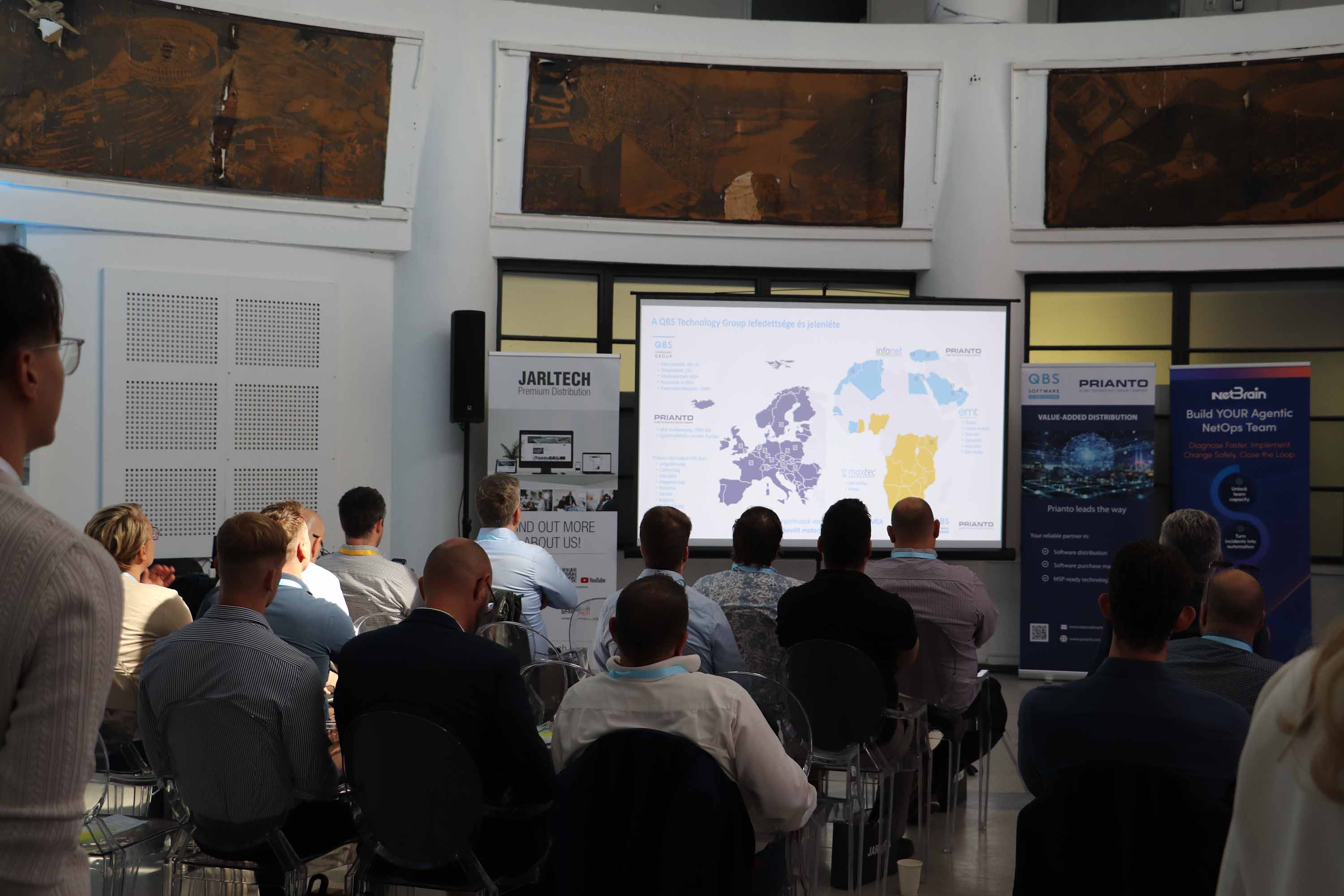
A specific characteristic of the CEE cybersecurity market is that while the region as a whole constitutes a significant technology market, individual countries are often too small for an international vendor to build a standalone presence everywhere. Furthermore, the market is highly fragmented, characterized by differing regulations, partner networks, and procurement models across countries.
This structure favors regional distribution and market development models capable of covering the entire region through a single point of entry. A significant portion of cybersecurity technology sales in CEE occurs through partner channels - with the involvement of system integrators, MSSPs, SOC providers, and consulting firms. Successful market entry is therefore not merely a sales task, but one of partner building, technical pre-sales, and market education.
In this environment, value-added distribution (VAD) platforms like Vivetech play an increasing role, providing not only product brokerage but also technological support, partner training, marketing, and market development for vendors.
Other News and Events from ViVeTech

What Is Indirect Prompt Injection? How Attackers Hijack AI Agents Through Web Content and Emails
Learn more
További híreink és eseményeink
Mi az az indirekt prompt injection? Így térítik el az AI ágenseket a webes tartalmakon és e-maileken keresztül
Olvasson tovább
Hírlevél feliratkozás

Sign up for our newsletter