

The Era of Continuous Compliance in the World of NIS2 and DORA – How the Community Shapes the Future of Resiliance

In recent years, across Europe, the discourse on cybersecurity and operational resilience has increasingly shifted from being purely technical to taking on a more societal character. Regulations such as NIS2 and DORA not only impose new expectations on organizations but also demand a complete cultural shift in how teams think about risks, collaboration, and accountability. These regulations mark the end of the era in which compliance was a periodic, recurring task, and they usher in a world where compliance appears as a continuous, living practice. The concept of continuous compliance is not merely a reaction to regulatory pressure; it is rather a mindset that organizes an organization’s people, processes, and technologies into a community.
Modern organizations operate in an environment that changes too rapidly for annual audits or occasional policy updates to be sufficient. Security threats evolve minute by minute, with new vulnerabilities, supply chain risks, and operational dependencies constantly emerging. Customers demand transparency, regulators require accountability, and partners expect maturity. In this context, NIS2 and DORA introduce a level of rigor that transforms reactive compliance into a proactive, integrated, and uninterrupted mode of operation.
The Shared Message of NIS2 and DORA: Compliance as a Continuous Capability
NIS2 expands the scope of sectors that are critical components of the European digital ecosystem and emphasizes risk management, rapid incident reporting, and supply chain security. DORA standardizes operational resilience in the financial sector and requires continuous monitoring of ICT risks, resilience testing, and more assertive oversight of third parties. Both frameworks are based on the same principle: compliance is continuous, not an event-driven proccess.
The greatest paradigm shift of continuous compliance is that compliance is no longer a silent background process. Compliance becomes a shared responsibility in which developers, security specialists, IT operators, procurement teams, service owners, executives, and external partners all participate. This unified sense of accountability transforms compliance from an administrative obligation into a communal practice. When an organization must prepare a report on a critical incident within hours, it can only be achieved if teams operate in a coordinated manner with transparent communication.
The foundation of continuous compliance is the ability of organizations to demonstrate their compliance at any moment. Manual data collection, screenshots, or pre-audit log searches are no longer sufficient. Evidence must be generated automatically and stored in a structured manner. In modern systems, every change, configuration, privilege review, risk assessment, and supplier interaction becomes live, searchable evidence.
One of the most important pillars of continuous compliance is real-time monitoring. DORA mandates continuous monitoring of critical ICT systems, while NIS2 requires extremely rapid reporting of incidents. These requirements are inconceivable without tools that can detect anomalies in real time. Real-time monitoring not only enhances security but also supports business continuity by indicating potential issues before they fully materialize.
The Supplier Ecosystem as a Community Space: Collaboration for Security
Continuous compliance extends across the entire supply chain. Supplier risks can no longer be managed merely as contractual issues; they require collaboration, shared transparency, and jointly maintained controls. NIS2 places particular emphasis on supply chain security, while DORA requires continuous oversight of third parties. Continuous compliance creates an ecosystem in which every participant contributes responsibly and consistently to resilience.
The key to the functioning of continuous compliance is culture. Organizations must dismantle siloed thinking. Security teams must collaborate with developers, procurement must account for resilience obligations, and executives must actively participate in understanding and managing risks. In the culture of continuous compliance, open discussion about risks and challenges becomes natural.
Strengthened Leadership Accountability
Both NIS2 and DORA underscore the importance of leadership accountability. Leaders must understand cyber risks, support security initiatives, and be responsible for the consequences of incidents. Continuous compliance provides real-time dashboards and risk indicators, enabling leaders to make decisions faster and with greater confidence.
Continuous compliance brings operational advantages by reducing administrative burdens. Automated monitoring and evidence collection free up specialists’ time, reduce errors, and lower compliance costs in the long term. Resilience tests mandated by DORA, including penetration tests and simulations, are only effective if data is captured automatically and fed back into processes.
One of the greatest, often underestimated values of continuous compliance is the preservation of organizational memory. Structured storage of evidence, decisions, and configurations reduces risks arising from staff turnover and helps organizations learn from past events. The knowledge base built in this way strengthens operational stability.
The Role of Artificial Intelligence: Predictive, Analytical, and Supportive Systems
Artificial intelligence elevates continuous compliance to a new level. AI can predict control failures, detect unusual patterns, provide recommendations, and interpret continuously evolving regulations. In the context of the complex requirements of NIS2 and DORA, AI does not replace compliance teams but complements and reinforces their work.
Organizations typically begin the transition by mapping requirements, assessing the current state, and addressing the most critical gaps. The culture of continuous compliance then gradually develops: from automated monitoring to compliance tasks embedded into daily processes.
The Strategic Advantage of Continuous Compliance: Trust, Resilience, and Competitive Edge
The long-term outcome of continuous compliance is an organization that is always audit-ready, continuously transparent, and consistently able to demonstrate its maturity. This not only helps avoid fines or incidents but also increases market trust, brand value, and competitive advantage.
Ultimately, continuous compliance is a community mindset born in the language of regulations but far exceeds it. NIS2 and DORA provide the framework; the true transformation occurs through team collaboration, a transparent culture, and collectively built resilience. In this new era, compliance is no longer a static report but a continuous dialogue between people, processes, and systems.
Other News and Events from ViVeTech
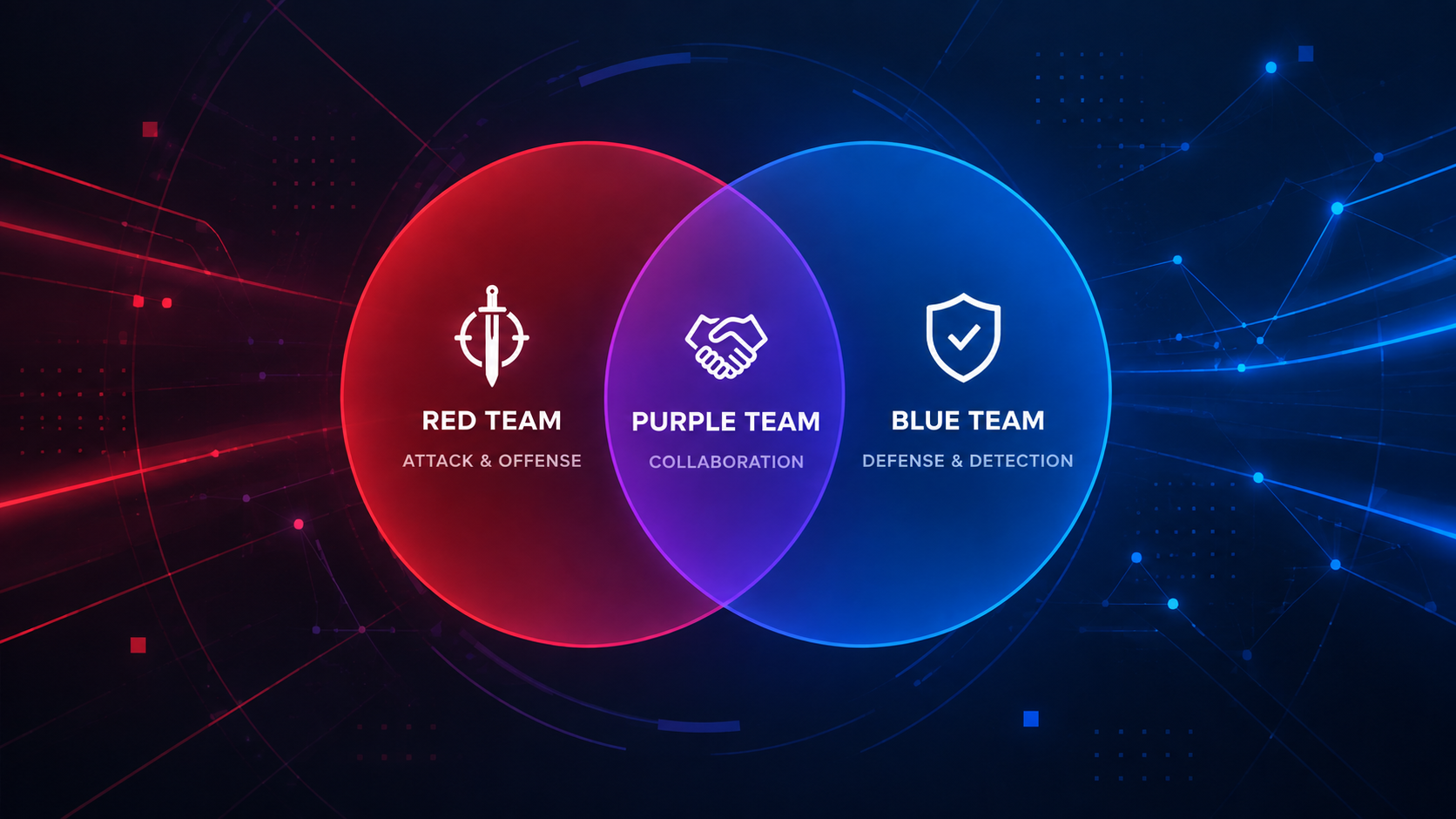
What Is Automated Penetration Testing? A Guide to Red, Blue, and Purple Team Automation
Learn more
További híreink és eseményeink

Shadow AI a munkahelyeken: hogyan támogassuk az innovációt az adatbiztonság feláldozása nélkül?
Olvasson tovább
Hírlevél feliratkozás

Sign up for our newsletter